
Form 8867: Why Your Tax Preparer Must Ask These Questions Every Year
Hey everyone, before I jump into today’s topic, I want to remind you – today is January 15th. If you’re watching this video right now, it’s probably past January 15th, so you may have already blown through the deadline. But remember, January 15th was the tax deadline for the previous quarter.
Now, if you’ve already paid the IRS enough money in advance throughout the year, this doesn’t apply to you. But this is mostly for people who are self-employed, have rental properties, or have income from other sources where taxes have not been withheld. If it’s past the 15th today, you can still pay, but penalties are going to start adding up. It’s better to do it now than to continue waiting around on it.
So today I attended an IRS continuing education webinar, and there were some really important reminders that came out of it that I want to share with you. The big one I want to talk about is Form 8867.
Table of Contents
- What is Form 8867?
- What Does Form 8867 Cover?
- Why the Requirements Change Every Year
- The Bottom Line: What You Need to Know
What is Form 8867?
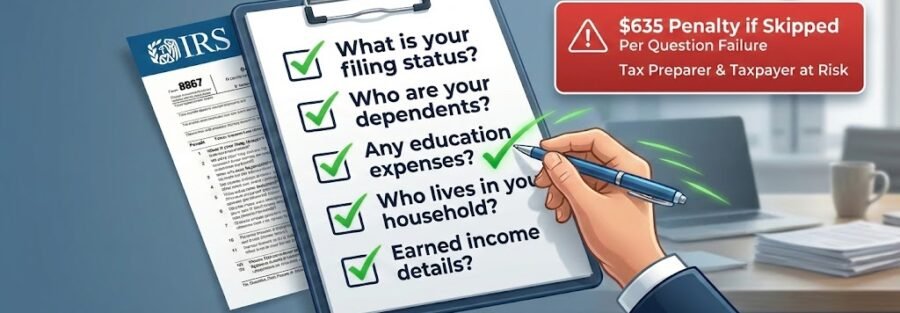
This form is the backbone of what your tax preparer is filling out when they’re preparing your return. If your tax preparer is not asking you detailed questions every single year about your filing status, your dependents, education credits, and household situation – that’s a red flag.
Form 8867 is the due diligence form that paid preparers must complete and file with your return if you’re claiming certain credits or filing statuses.
What Does Form 8867 Cover?
So what does Form 8867 actually cover? It covers:
- The Earned Income Tax Credit
- The Child Tax Credit and Additional Child Tax Credit
- The American Opportunity Tax Credit for education expenses
- Head of Household filing status
These are big-dollar credits that can significantly reduce your tax bill or increase your refund.
Why Your Preparer Asks So Many Questions
But here’s the thing – the IRS holds your tax preparer accountable for verifying that you actually qualify for these credits. That’s why your preparer needs to ask you questions about:
- Who lives in your household
- Who you’re supporting financially
- Whether your kids are in college
- What education expenses you’re paying
Why the Requirements Change Every Year
Now here’s what you need to understand – these requirements change every year. The rules, the penalties, the income limits, the verification requirements – they all get updated annually.
The Penalties Are Serious
For returns filed in 2025, the penalty for a preparer who doesn’t meet due diligence requirements is six hundred thirty-five dollars per failure. That means if your preparer fails to properly verify your eligibility for all four of these tax benefits, they could face a twenty-five hundred forty dollar penalty on just your one return.
So when your preparer is asking you these questions before tax season even starts, they’re not being nosy – they’re protecting themselves from massive penalties and protecting you from an IRS audit.
The Bottom Line: What You Need to Know
So bottom line – if your tax preparer is not asking you detailed questions about your dependents, your filing status, your education expenses, and your household situation every single year, you need to question whether they’re doing their job properly.
Form 8867 is not optional. It’s required by law. And if your preparer isn’t completing it correctly, both of you could be in trouble with the IRS.
If you have questions about this or need help making sure your tax preparer is meeting their due diligence requirements, reach out to us at D2 Tax. We stay on top of these requirements every single year because it’s our responsibility to get it right.
Key Takeaways
- January 15th is the quarterly estimated tax payment deadline for self-employed individuals and those with income where taxes haven’t been withheld
- Form 8867 is a required due diligence form that tax preparers must complete when you claim certain credits or filing statuses
- Form 8867 covers the Earned Income Tax Credit, Child Tax Credit, American Opportunity Tax Credit, and Head of Household filing status
- The penalty for preparers who don’t meet due diligence requirements is $635 per failure in 2025
- If your preparer fails to verify all four tax benefits properly, they could face a $2,540 penalty on just one return
- Your tax preparer asking detailed questions about dependents, household situation, and education expenses is protecting both of you from IRS penalties and audits
- Form 8867 requirements change every year, which is why these questions must be asked annually
FAQ
What is Form 8867 and why does it matter to me? Form 8867 is a due diligence form that paid tax preparers must complete and file with your return if you’re claiming the Earned Income Tax Credit, Child Tax Credit, American Opportunity Tax Credit, or Head of Household filing status. It matters to you because if your preparer doesn’t complete it properly, both of you could face IRS penalties or audits.
Why does my tax preparer ask me the same questions every year? Because Form 8867 requirements change annually. The rules, penalties, income limits, and verification requirements are updated every single year. Your preparer needs to reverify your eligibility for these credits and filing statuses each tax season to comply with current IRS requirements.
What happens if my tax preparer doesn’t complete Form 8867 correctly? For returns filed in 2025, the penalty is $635 per failure. If your preparer fails to properly verify your eligibility for all four tax benefits covered by Form 8867, they could face a $2,540 penalty on just your one return. Additionally, you could be at higher risk for an IRS audit.
What credits and filing statuses require Form 8867? Form 8867 covers four specific tax benefits: the Earned Income Tax Credit (EITC), the Child Tax Credit and Additional Child Tax Credit (CTC/ACTC), the American Opportunity Tax Credit (AOTC) for education expenses, and Head of Household filing status.
I missed the January 15th estimated tax deadline. What should I do? If it’s past January 15th, you can still pay your quarterly estimated taxes, but penalties will start adding up. It’s better to pay now than to continue waiting. This deadline applies mainly to people who are self-employed, have rental properties, or have income from other sources where taxes have not been withheld.
How do I know if my tax preparer is doing their job properly? If your tax preparer is not asking you detailed questions every single year about your dependents, filing status, education expenses, and household situation, that’s a red flag. A compliant preparer will ask these questions to properly complete Form 8867 and protect both of you from IRS penalties.
Is Form 8867 optional for tax preparers? No. Form 8867 is not optional. It’s required by law for paid tax preparers when you’re claiming certain credits or filing statuses. If your preparer isn’t completing it correctly, both of you could be in trouble with the IRS.
If your tax preparer is not asking you detailed questions every year about your dependents, your filing status, your education expenses, and your household situation, you need to question whether they’re doing their job properly. Form 8867 is required by law, and proper due diligence protects both you and your preparer from IRS penalties and audits.