
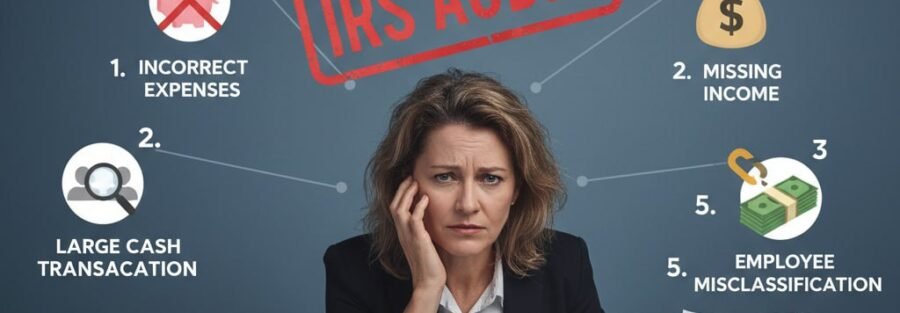
The IRS Is Watching Your Losing Business — Here's Why That Matters
If you own multiple businesses — and a lot of you do — the IRS is paying very close attention to which ones are making money and which ones aren’t.
Whether you’re running an LLC or an S-Corp, your profits flow straight through to your personal tax return. You pay tax on whatever the business makes, based on your individual tax rate. Simple enough, right?
Here’s where it gets interesting. Those losses from your other businesses don’t just sit there. They offset the income from your profitable business. Which means your taxable income goes down. Which means you pay less in taxes.
And the IRS knows exactly what that looks like.
Table of Contents
- How Business Losses Flow Through to Your Personal Return
- The IRS Question Every Business Owner Should Expect
- What the Hobby Loss Rule Actually Means for You
- What the IRS Looks For — The Profit Motive Test
- Why What Goes on Your Tax Return Matters So Much
- Key Takeaways
- Frequently Asked Questions
How Business Losses Flow Through to Your Personal Return
Let’s say you have one business that’s crushing it. That’s your main thing. That’s where you spend most of your time, most of your energy. And then on the side, you’re poking around with other ideas. Maybe a second business, maybe a third. And those other ones? They’re losing money every single year.
Those losses offset the income from your profitable business. Your taxable income goes down. You pay less in taxes. That’s how the math works — and it’s also exactly what the IRS is watching for.
The IRS Question Every Business Owner Should Expect
When the IRS sees a business that is consistently recording losses and offsetting income from another profitable business, they’re going to ask one simple question:
Is this an actual business, or is this a hobby?
Because here’s what they don’t want. They don’t want someone turning a weekend hobby into an LLC, recording losses every year, and using those losses to wipe out income from a real, thriving business. That’s not a loophole. That’s a red flag.
What the Hobby Loss Rule Actually Means for You
There’s a specific IRS rule around this — the hobby loss rule. If the IRS decides your business looks more like a hobby than a legitimate operation, they will disallow those losses. Every single one of them. Then they’ll come back for the taxes, the penalties, and the interest on top of that.
The IRS will question a business that is only recording losses — even if there’s no audit trigger anywhere else on your return.
What the IRS Looks For — The Profit Motive Test
They want to see a legitimate profit motive
The IRS wants to see that you’re operating this business like a business — not like something you do for fun on the weekends. They’ll look at multiple factors when making that determination.
- Your history of income and losses
- Your record-keeping practices
- How much time and effort you’re actually putting in
- Whether you’ve ever turned a profit or have a realistic expectation of doing so
- Whether you depend on the income from this activity
- The financial status of the taxpayer overall
No single factor is automatic. The IRS looks at the full picture. But if your secondary business is consistently posting losses year after year with no clear path to profitability, you need to be ready to explain why.
Why What Goes on Your Tax Return Matters So Much
This isn’t just about the numbers. It’s about the story those numbers tell.
What’s the purpose of that business? What’s the plan? Why does it make sense to continue operating it? If your return doesn’t answer those questions — or worse, raises more questions than it answers — you’ve already handed the IRS something to work with.
And this is exactly why what you put on those tax returns is so important. Not just the numbers, but the story those numbers tell.
What you should be doing
- Talk to your tax professional — not after the return is filed, but before
- Make sure the purpose of every business you operate is crystal clear, on paper and in practice
- Document your time, your intent, and your plan for profitability
- If a business is consistently losing money, understand how the IRS may view it
If you’re running multiple businesses and some of them aren’t profitable yet, make sure your returns are telling the right story. Because if they’re not, the IRS will make that decision for you. And you won’t like the answer they come up with.
Key Takeaways
- If you own multiple businesses, the IRS watches how losses in one offset income in another
- A business that only records losses — with no profit history and no clear profit motive — can be reclassified as a hobby
- If the IRS labels it a hobby, all those losses get disallowed, and you owe back taxes, penalties, and interest
- The hobby loss rule applies to LLCs and S-Corps, not just sole proprietors
- Consistency, documentation, and clear business purpose are your best protection
- What goes on your tax return matters — it’s not just numbers, it’s the story the IRS reads
- Talk to your tax professional before filing, not after a problem shows up
Frequently Asked Questions
Can the IRS disallow losses from a legitimate business?
Yes. If the IRS determines that your business lacks a profit motive — meaning it looks more like a hobby than a real business — they can disallow the losses entirely. That means you’d owe back taxes on the income those losses were offsetting, plus penalties and interest.
How does the IRS decide if a business is a hobby?
The IRS uses a profit motive test that looks at multiple factors: your history of profits and losses, how much time and effort you put in, your record-keeping, whether you’ve ever made money, and whether you have a realistic expectation of future profit. No single factor determines the outcome — they look at everything together.
Does this apply to LLCs and S-Corps, or just sole proprietors?
It applies regardless of your entity structure. Whether you’re running an LLC, an S-Corp, or operating as a sole proprietor, the IRS can apply the hobby loss rule if they believe the activity lacks a genuine profit motive.
What should I do if one of my businesses has been losing money for several years?
Exclusive use means ONLY for business. Not mostly. Not usually. ONLY. If your kids do homework in that room, if guests sleep there even twice a year, if you fold laundry there, it doesn’t qualify. You also can’t claim both a home office and a separate office unless you can clearly prove which one is your principal place of business.
How does the IRS catch unreported income from cash businesses?
Talk to your tax professional before filing. Make sure the purpose of the business is clearly documented, your books are clean, and your return reflects a legitimate business operation with a real plan for profitability. The more defensible your position on paper, the better.
Can losses from one business offset income from another?
In many cases, yes — that’s how the tax treatment of pass-through entities works. But the IRS is specifically watching for situations where losses appear to be inflating deductions without a legitimate business behind them. Documentation and intent matter a lot here.
What happens if I get audited and the IRS questions one of my businesses?
They’ll typically audit a few line items first, assess your level of compliance, and then decide whether to dig deeper. If they find inconsistencies or poorly documented deductions, the investigation expands. Consistency across your returns and clean documentation are what keep audits shallow.
Is it worth having multiple businesses if some of them are losing money?
That depends entirely on your situation. The key is making sure every business you operate has a clear, documentable purpose and a realistic path to profitability. Without that, you’re creating risk, not opportunity. Every tax situation is different — get guidance specific to your circumstances.
The Bottom Line
The IRS is not looking to catch you doing something wrong. But they are looking at your returns, and they will question a business that is only recording losses — even if everything else looks clean.
If you’re running multiple businesses, make sure every one of them can stand on its own as a legitimate operation. Document your intent, your time, and your plan. And make sure your tax professional knows the full picture before your return gets filed.
Because any mistake can be fixed — but you have to acknowledge it first. And it’s always better to get ahead of it than to deal with it after the fact.
Not sure where your businesses stand? Book a free 30-minute consultation with D2Tax. We’ll give you a clear picture of your specific situation — no obligation, no pressure.